
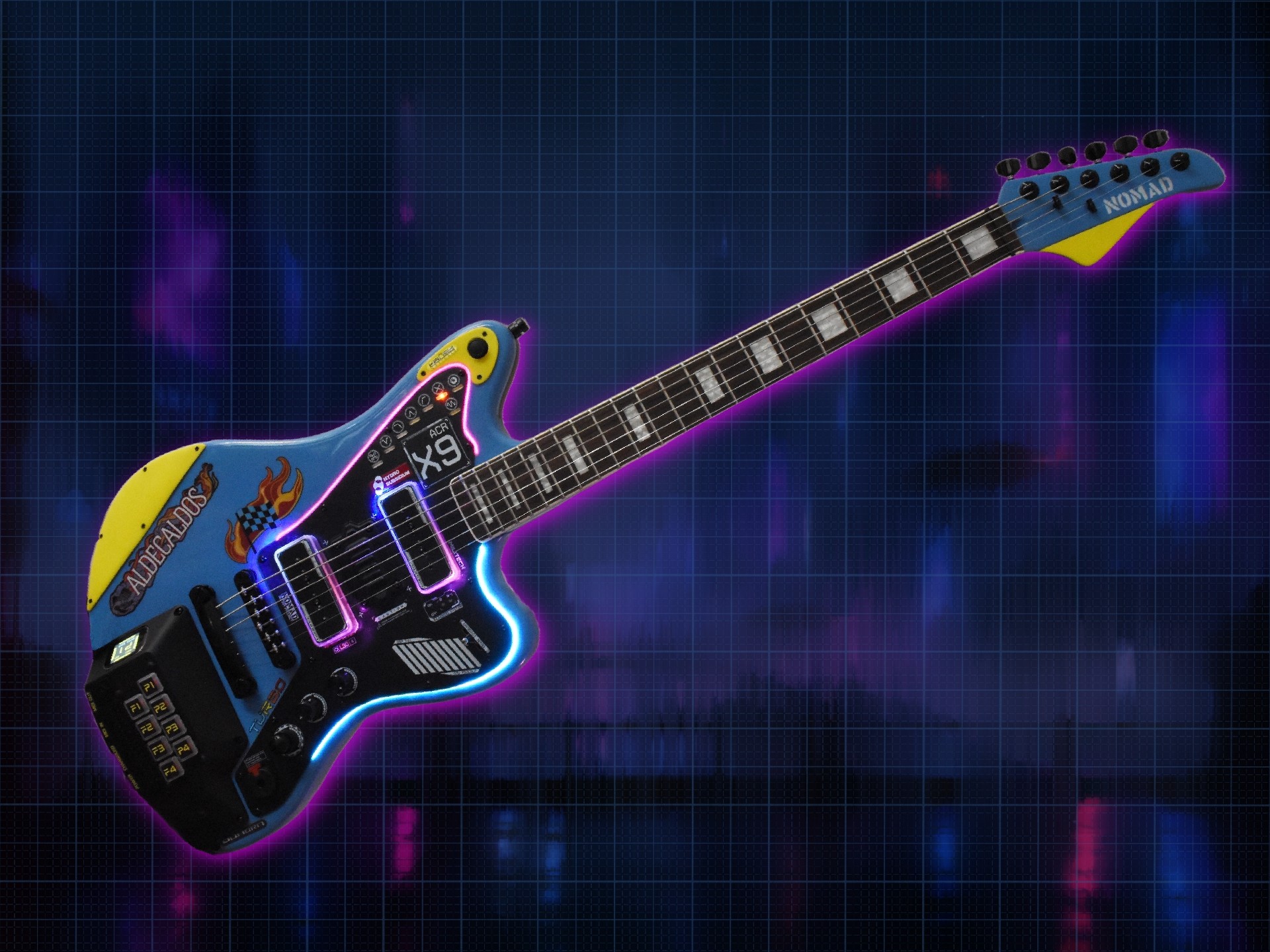
NOMAD Guitar Project.
Introduction, concepts, first ideas.
The Nomad, how it started, changed over the design iterations and evolved into a mixture of classic shapes (Jazzmaster) and futuristic outfit and functionalities inspired by the Cyberpunk lore.
Back in April/May 2025 Harley Benton announced a contest in their Kit building. While it was already too late for me to take part in it, building a guitar was definitely a very tempting idea as i have never built (ok, put a kit together) a guitar before.
Where it leads, what new project it might trigger? Building a guitar, even from a kit is an excellent way to learn a lot about technical side of the instrument, setup, intonation, fret levelling, pickup construction. Definitely something i wanted to dive deeper into for a long time.
I have picked up the JA-Kit, a classic model with 2 x P90 pickups. Naturally, being myself i thought what kind of electronics i might put into it. Especially since i already had a few ideas brewing for years, eg. an effect that never sounds the same twice (more on this later...).
At start i already knew what i want the guitar NOT to be:
- another one of those instruments with everything onboard, amp/cab sims, effects, where you plug your headphones and it's all what is needed. Nice idea for a travel instrument, not for an experimental one.
Instead, this axe will use a traditional approach:
- It will be plugged into effects, amps and do what any normal guitar does.
- All the onboard effects and features will focus on shaping the sound prior any overdrive or distortion. Various filters, synth based drone generators, samplers, octavers. Everything that changes the tone, morphes it, adds layers, interferences, anything that might end up creating new insterestng sounds.
- The main effect section is 100% analog giving a latency free output.
- Any synth based sounds and layers can be DSP generated with latency, these are just add ons. Although this might change, the architecture is flexible enough.
- I want the P90 and huge fuzzy gain sound. P90s are single coils, there has to be done something to make them hum free and ideally make the mod as transparent to the original sound as possible.
- Most important feature - bypass. With one flip of a push-pull pot all the active electronics can be bypassed and the guitar works just as a normal passive pickup instrument, no power needed.
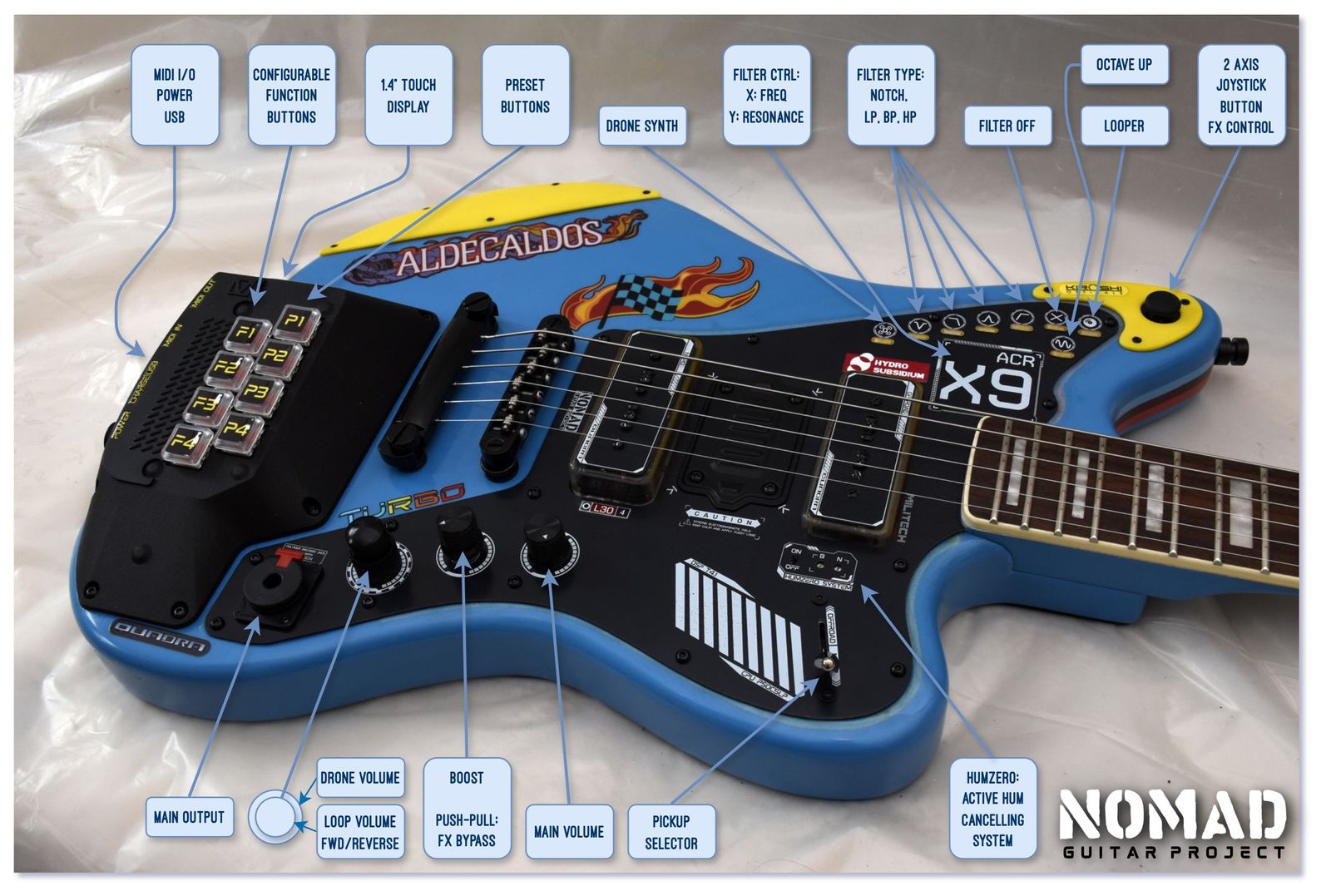
Features
Visual aspects
this is where the Cyberpunk 2077 comes in. The cars in the game perfectly combine the classic shapes we know from the past with cybernetic internals and futuristic approach. Something that fits the concept of this guitar perfectly. Sound wise i was aiming at stoner rock type sounds, heavy fuzzy tones. That means desert, desert people in the game are the Nomads, known for their tech skills in modifying and upgrading any machinery, often improvising, mixing techniques in an unorthodox ways.
Their Quadra Type66 "Wingate" was my inspiration for the looks of the guitar. And the name was set as the "Nomad".

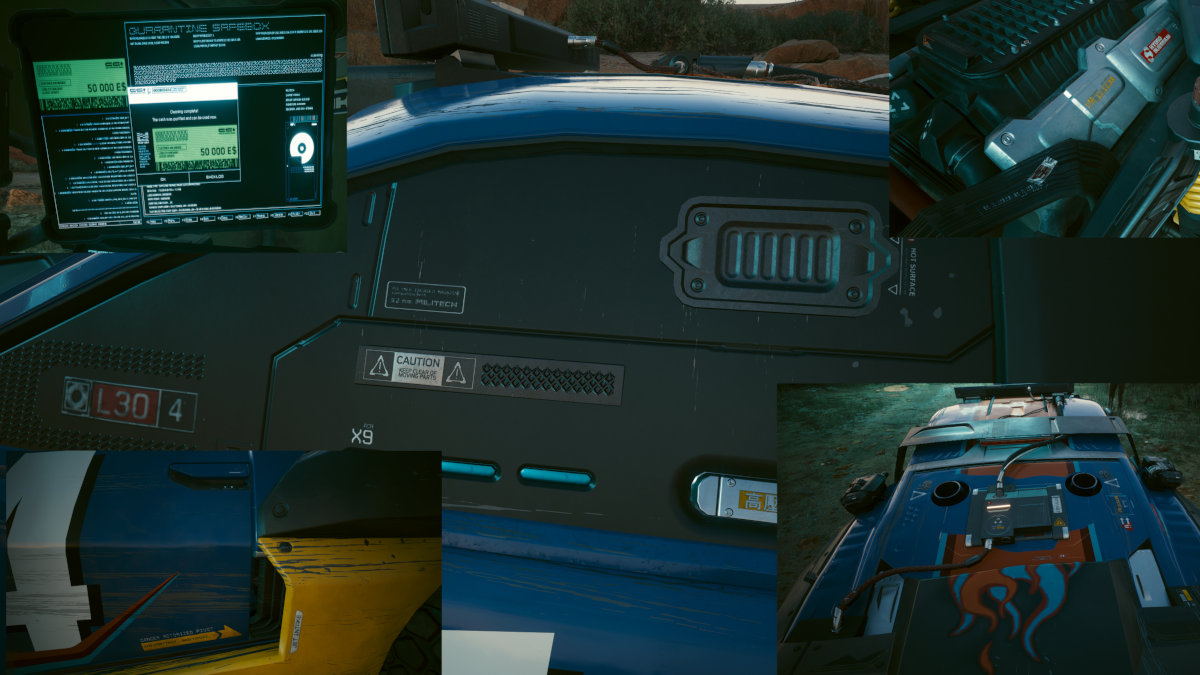
I started to make many screenshots to look at the details, decals, trying to model them, adapt to the shape of the body, put everything in a way that will be fully functional and ergonomic.
Many parts were redesigned in 3D CAD software and printed out in resin, not all exactly match the shapes found in the game, as they were used as inspiration only.
Pickguard
Pickguard is one of core elements of the instrument. It is actually a one huge PCB containig all the controller electronics, parts of the audio system and the user interface elements on the top side.
Top side controls:
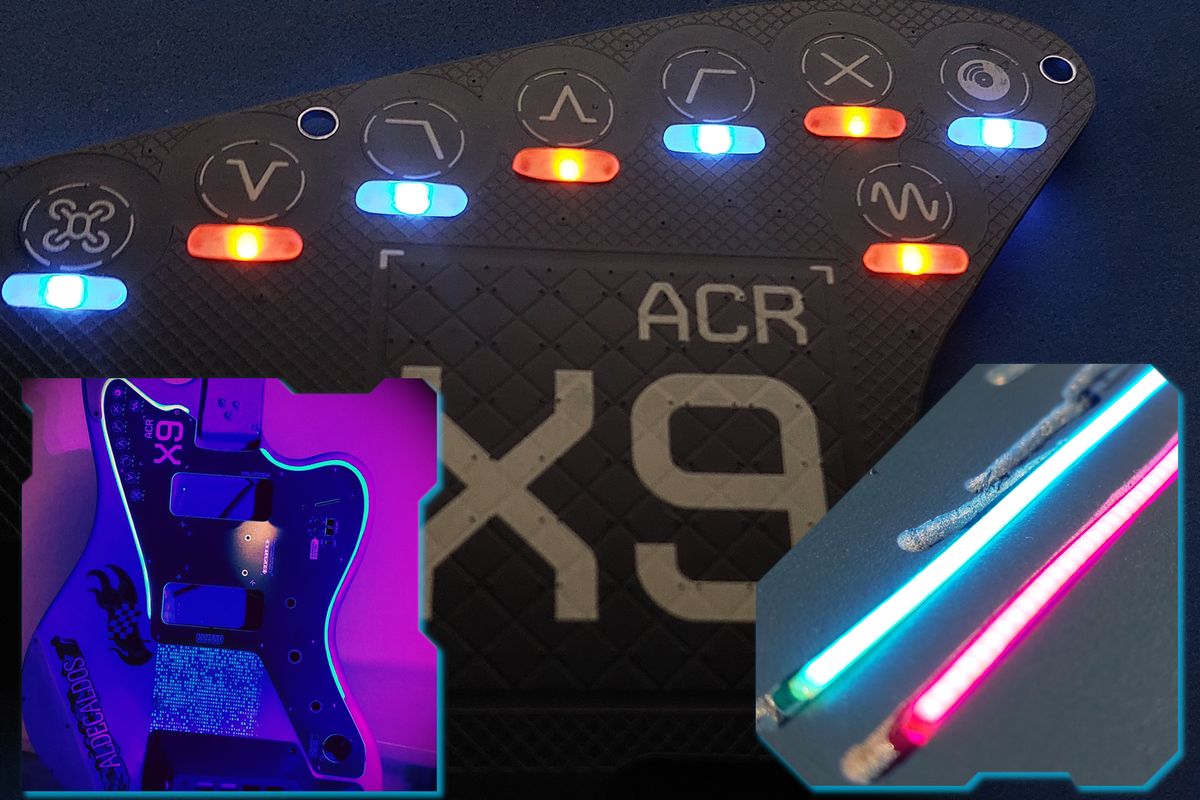
- 8 capacitive touch function buttons with LEDs
- X-Y trackpad for continuous parameter control
- Flip switch to activate the hum cancelling system
- Pickup selector switch
- 3 pots, Volume, Boost (push-pull) and one coaxial providing 2 control signals for the DSP
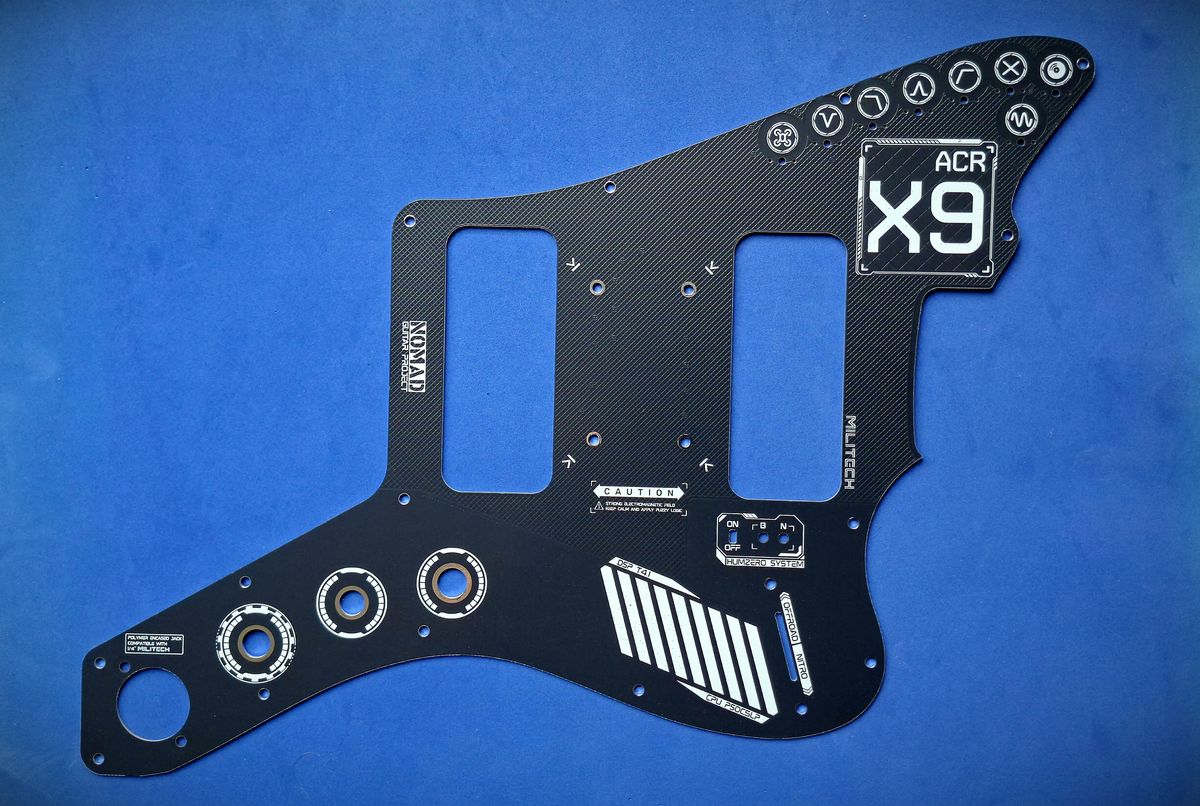
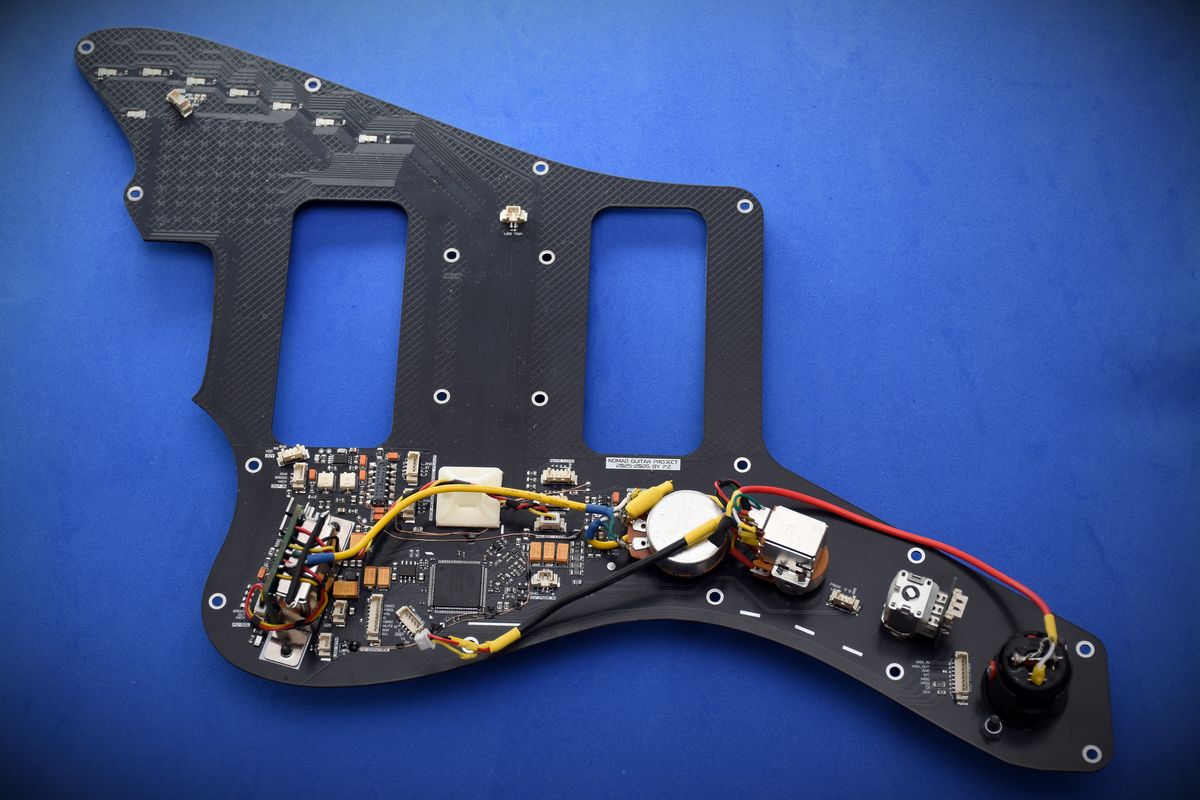
The back side is where most of the "operational" magic happens like scannig the capacitive touch sensors, reading pots, genearating control signals for the analog effect section, "HUMZERO" the active noise cancelling system, separate pickup preamps (both are sent directly to the DSP as a stereo signal). One of the most difficult challenges was to design this board in a way it does not interefere with the sensitive single coil P90 pickups.
Lights
Of course, being a Cyberpunk themed project, there must be lights, neon ligths, blinking lights and preferably displays. An interesting area to explore: designing a low noise and low power light systems that can be built into guitars. Initial testing showed positive results, small diameter led filaments can be built into the body of the guitar. The bezels for the function keys on the pickguard are made of translucent resin and provide enough diffussion as well as their placement adds a defree of haptics.
A secondary, passive light source are the fluorescent accents showing up under UV light
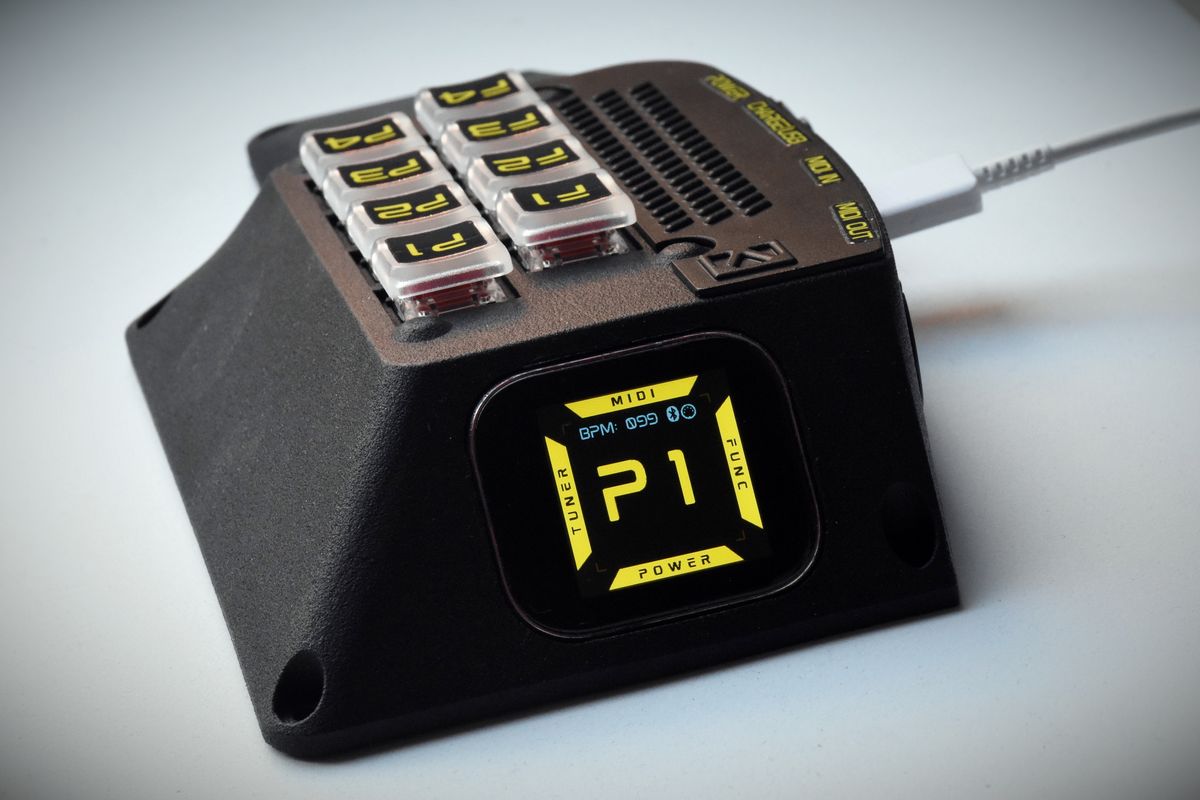
The power/DSP box at the back of the guitar body has an 8 key illuminated (RGB Leds) keypad and a small display with touch interface.
Pickups
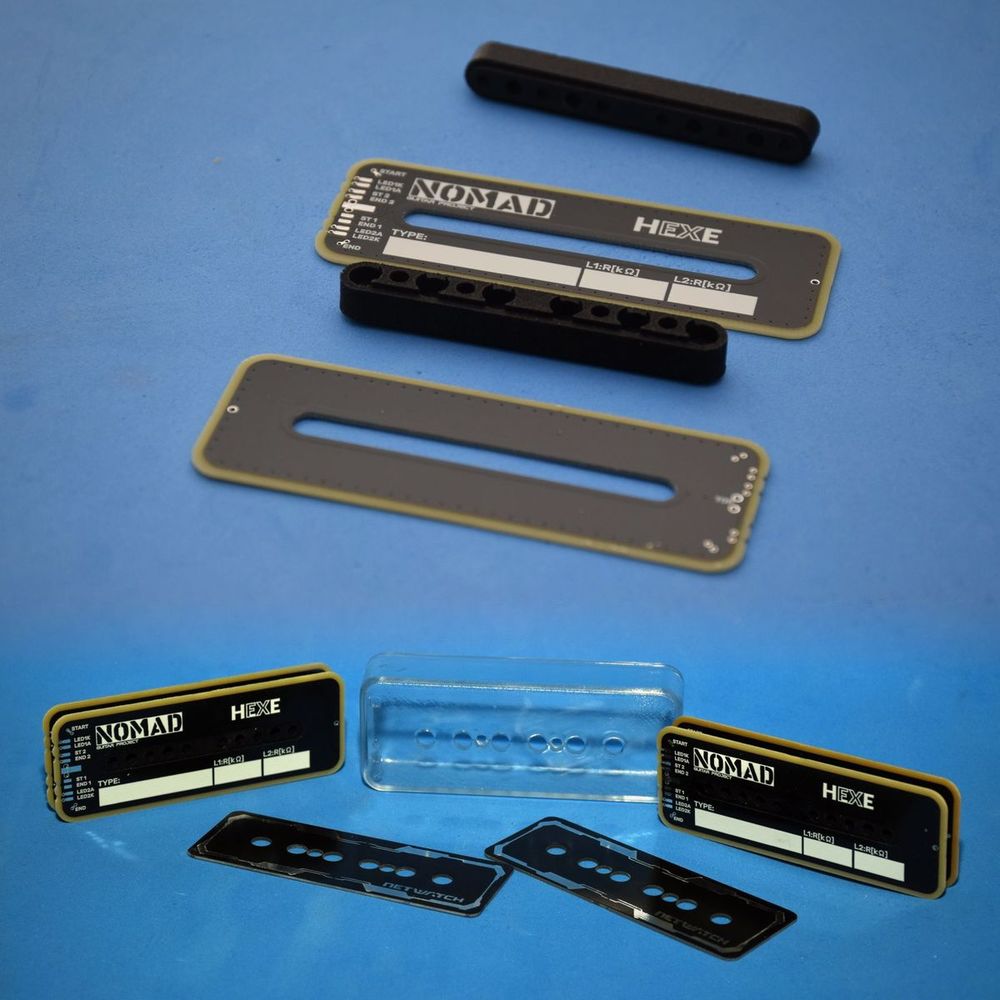
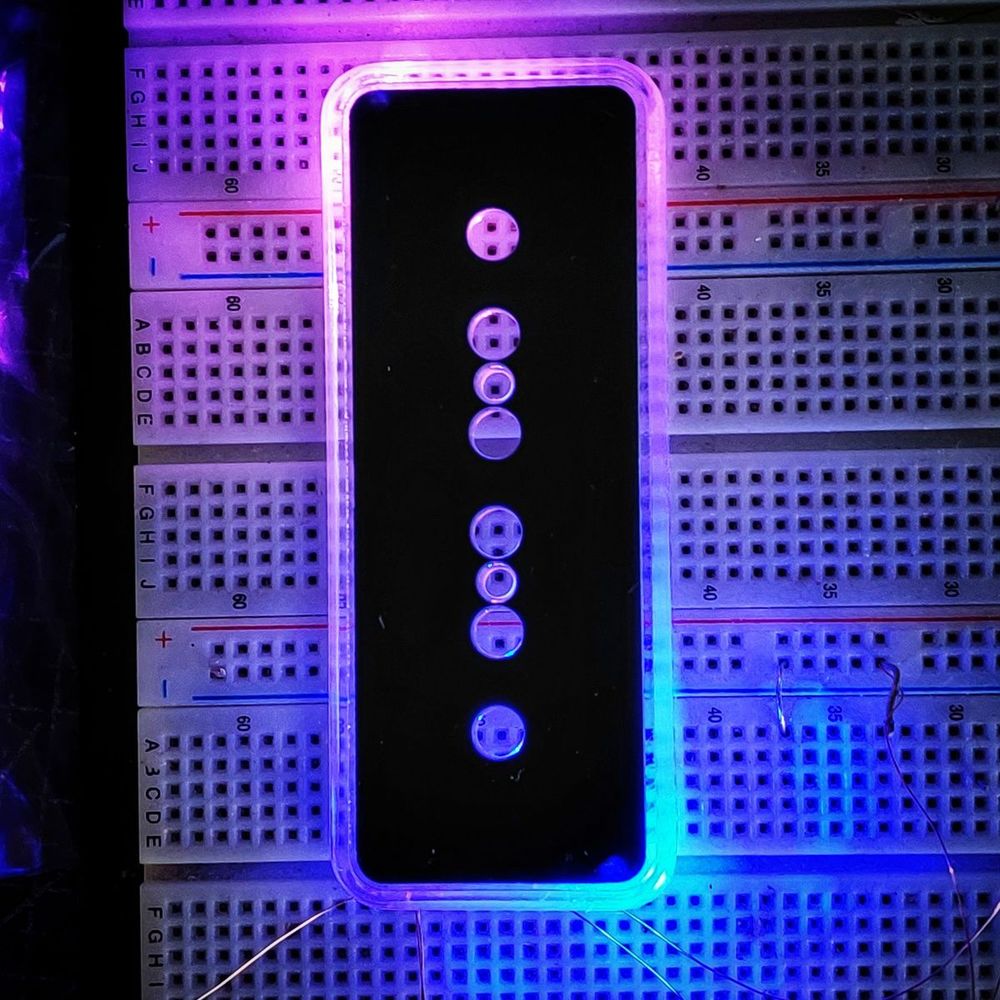
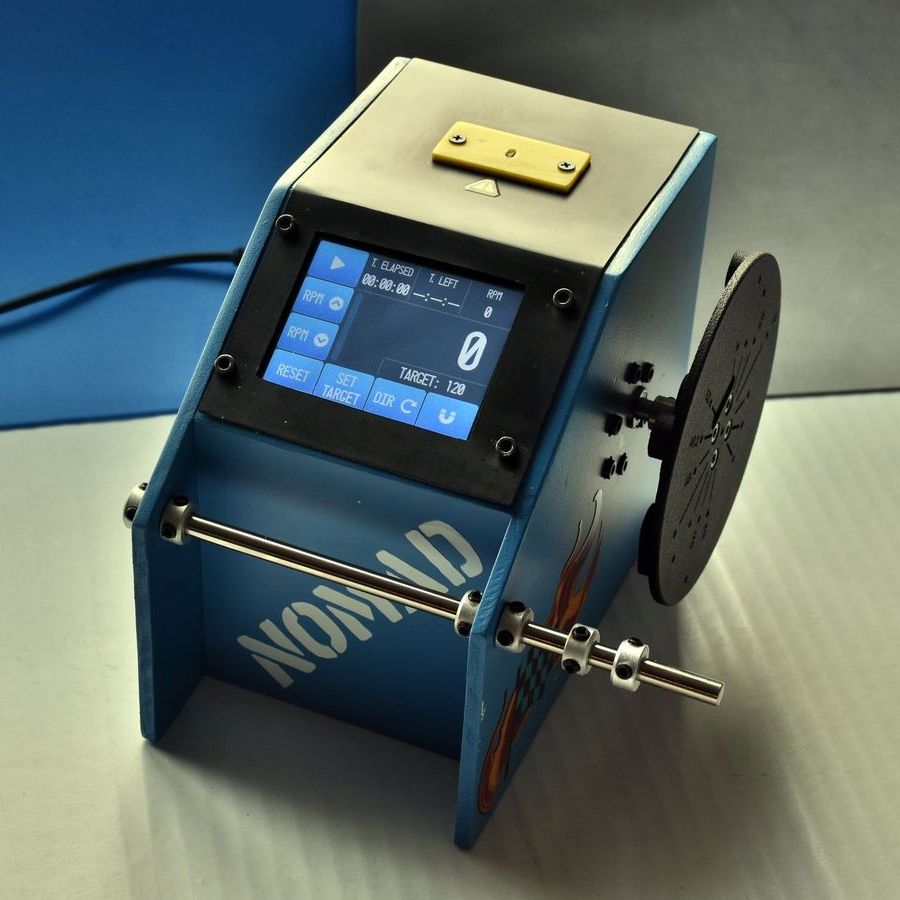
Making a set of noiseless P90 pickups involved designing a custom bobbins, transparent covers (pickups are illuminated from inside) and a tool to make them - a pickup winder.
DSP | Power | Comms
The box at the back of the body contains all the digital effects and power related circuit. Plus a small touch display used for setup opearations and the tuner.
This box provides also:
- USB-C socket for programming, debufgging, USB MIDI interface and battery charging
- Hardware DIN5 MIDI IN/OUT sockets
The main source of power for everything are two high capacity Li-Ion cells recharchable via the USB-C socket.
That's all for now. Coming up are more detailed write ups about the construction and design process of all the parts of the project.


